
Dedicated to the memory of my son, Jason (1973-2024)
All scripture quotations from the King James Version
“But a tender hand will guide us lest we fall. Christ is going down the valley with us all” —from “Going Down the Valley”, lyrics by Jessie H. Brown
Let me begin with a visual impression I had many years ago. A picture, they say, is worth a thousand words. I was singing in a church choir. We were in the loft of the chancel at the beginning of the service singing the Gloria Patria: “As it was in the beginning, is now and ever shall be, world without end, Amen, Amen.” The multi-colored morning light streamed through the stained glass surrounding me and created a mental image of the connectedness between this world and the next, a “world without end”. I was convinced then and there that, while we may not be able to see it, it exists nonetheless. I later learned that I was not alone in these thoughts. The chancel is designed for us to look beyond, to envision a “communion with the saints”. Its aim is to make the other world a living presence. It is an affirmation of God’s saving and keeping power, an expression of God’s loving nature.
We feel the absence of those who are no longer with us and pray, as we should, for them as we do for the living. We honor them in such ways as photographs on the walls of our homes, flowers on their birthdays, and support for causes in which they believed. Our prayers include them as well as those here. Regardless of the many views which exist of this state of being, skilled psychics have achieved success in contacting and communicating with the departed and can sometimes summon them to speak. On a non-psychic level, I pray for them as I do for those here and draw upon that long ago chancel vision, where those living are joined to those in the space just beyond, gathered with us. This notion is not solely mine; for it is included in many great hymns which have spoken similarly.
The Bible is full of messages of God’s saving and keeping power—just look them up in a concordance or internet reference. Words such as save, keep, uphold, shelter, rescue, shield, deliver, help, preserve, sustain, rest, safety, sanctuary, guard, lead, sustain—all of them abound and come rushing at us like a mighty torrent. Yet, throughout the Old and New Testaments they are interspersed with the mention of smiting of enemies, destruction of the wicked, and so on. Why should this be so? Let history be our guide. It is easy to see how a warlike people in a cauldron of territorial hatred and violence adopted that view, but religious thought has (at least in some quarters) moved on from there (see the post Farewell, Angry God). We rightly question how a God of love can sentence his children to everlasting punishment, even as it is reasonable to believe that we must face judgment for our deeds. As the scriptures develop, the new wine no longer fills the old bottles, though the vestiges of the older views still remain, both in the biblical record and in the beliefs of some adherents.
Saving, keeping, and more: Let this litany of scripture references wash over your consciousness: “The Lord bless thee, and keep thee:The Lord make his face shine upon thee, and be gracious unto thee: The Lord lift up his countenance upon thee, and give thee peace.” (Numbers 6:24-26) “As an eagle stirreth up her nest, fluttereth over her young, spreadeth abroad her wings, taketh them, beareth them on her wings….” (Deuteronomy 32:11) “But thou, O Lord, art a shield for me; my glory, and the lifter up of mine head. I cried unto the Lord with my voice, and he heard me out of his holy hill. Selah. I laid me down and slept; I awaked; for the Lord sustained me.” (Psalms 3:3-5) “Preserve me, O God: for in thee do I put my trust.” (Psalms 16:1) “And as for me, thou upholdest me in mine integrity, and settest me before thy face for ever.” (Psalms 41:12) “God is our refuge and strength, a very present help in trouble.” (Psalms 46:1) “Cast thy burden upon the Lord, and he shall sustain thee: he shall never suffer the righteous to be moved.” (Psalms 55:22) “I long to dwell in your tent forever and take refuge in the shelter of your wings. For you, God, have heard my vows; you have given me the heritage of those who fear your name.” (Psalms 64:4-5) “He will cover you with his feathers, and under his wings you will find refuge.” (Psalm 91:4)
Psalm 84 is so eloquent that it must be presented in its entirety: “How amiable are thy tabernacles [also translated in RSV “how lovely is thy dwelling place”], O Lord of hosts! My soul longeth, yea, even fainteth for the courts of the Lord: my heart and my flesh crieth out for the living God. Yea, the sparrow hath found an house, and the swallow a nest for herself, where they that dwell in thy house: they will be still praising thee. Selah. Blessed is the man whose strength is in thee; in whose heart are the ways of them. Who passing through the valley of Baca make it a well; the rain also filleth the pools. They go from strength to strength, every one of them in Zion appeareth before God. O Lord God of hosts, hear my prayer: give ear, O God of Jacob. Selah. Behold, O God our shield, and look upon the face of thine anointed. For a day in thy courts is better than a thousand. I had rather be a doorkeeper in the house of my God, than to dwell in the tents of wickedness. For the Lord God is a sun and shield: the Lord will give grace and glory: no good thing will he withhold from them that walk uprightly. O Lord of hosts, blessed is the man that trusteth in thee.” These are passages in which we can place our hope.
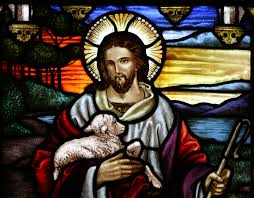
May I give you another picture? The most powerful image and probably the one that Christians remember best, is that of Jesus as the Good Shepherd, who knows and cares for his sheep (as well as those “not of this fold”, establishing his role as a universal savior). This love and care transcends much of the thinking which had gone before: “Then said Jesus unto them again, Verily, verily, I say unto you, I am the door of the sheep…. by me if any man enter in, he shall be saved, and shall go in and out, and find pasture….I am come that they might have life, and that they might have it more abundantly. I am the good shepherd: the good shepherd giveth his life for the sheep….I am the good shepherd, and know my sheep, and am known of mine. As the Father knoweth me, even so know I the Father: and I lay down my life for the sheep. And other sheep I have, which are not of this fold: them also I must bring, and they shall hear my voice; and there shall be one fold, and one shepherd.” (John 10:7-16) This has given hope and comfort to untold millions who have placed their hope and confidence in him.
And so the Lamb of God takes upon himself our human nature, i.e. the sin of the world (John 1:29), living as one of us and drawing us to his saving presence. It is as simple as that, and is affirmed over and over again throughout the New Testament message. Furthermore, it is he who unites the living and the dead. Many historical and contemporary accounts exist of visual encounters with Jesus, both those living and those who have returned from a clinically dead state (see the post I Just Want to See His Face). Jesus unites all of us, here and in the next world, as we experience him, and in the feast that has no end we will have communion with one another.
Saving and keeping must win out over condemnation—the Divine nature cannot be otherwise.
 Divinepersonhood