
“I think, therefore I am.” —Rene Descartes
You’ve got to hand it to Descartes. He got the ball rolling to move the art of thinking to the forefront of philosophy and power it into the modern age. In the words of Logan Pearsall Smith, “…it was no doubt helped by Montaigne, who was the first in modern times to devote himself to the study of his own moods and thoughts. This change in point of vie gained also impetus from the great revolution in philosophy when, in the Seventeenth Century, Descartes turned the world inside out, and defined the activity of consciousness, the certainty of the thinking self, as the most immediate fact of existence (Logan Pearsall Smith. The English Language, p.243).” He is not without his critics, however. Albert Schweitzer, in his Philosophy of Civilization, criticized Cartesian philosophy as reducing humanity to an abstract, isolated thinker (cogito) while ignoring the physical, material, emotional, and sensuous aspects of life. This being said, the revolution in thought took a giant leap forward.
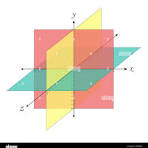
Imagine a construction in three dimensions, something you might see in a geometry class, of intersecting planes crossing at different angles, extending infinitely in space. Now imagine other intersections of three, four, or more planes at other points in this elaborate construction, each plane intersecting with other planes as it passes into infinity. This multi-faceted maze represents ways of “knowing” in its infinite variety, with varying perceptions occurring individually, or as the intersections of multiple planes, linked and related to each other.
Thoughts have influence beyond the mind. Powerful ideas can move and shape the experience of living. They can open new vistas of purpose and endeavor. Great ideas are social forces. They are monuments to human achievement and form a heritage for future generations.
To know is to bind. When something becomes known it is bound to the intellectual field of the person who possesses it. It also serves as a tool which may be used to gain additional conceptual power by the aggregation of ideas which, in turn, attract others. What we conceive, we name, what we name we control, and what we control serves us. Knowing brings the conceptual universe into our grasp and influence. It is a powerful tool. The Information Age values the knowledge workers, as well as their work product. Intellectual property has economic as well as a conceptual value.
Planes of thoughts are planes of power. There is a sense of mastery which comes with learning. This power is further solidified and extended as it branches out and links with other thoughts to form vast matrices (constructs, organizational schemes), as applications are made to exert a grasp upon existence. This can cause fulness and exhilaration, even an intoxicating effect, which comes from acquiring knowledge. Learning in today’s information age is greatly expanded and is in many cases there for the taking, in low-cost or no cost databases extending throughout the internet. The intellectual grasp of the average person has extended in ways hardly imaginable a few decades ago. The potential for intellectual development is great, but brings with it a need for caution, for the World Wide Web contains myriad deposits of misinformation, downright lies, and deception. Treasure and trash are mixed together. Increased knowledge requires increased discernment. As a classroom teacher, one of my curricular goals was to instruct students in detecting false or misleading information. It is a vital tool. In addition, the ability to select, cut, and paste multiple references must be matched with the ability to synthesize, edit, and express this information in a meaningful original form.
There is beauty in a system of thought. The aggregate has power which is increased from that of the singular. I remember the Periodic Table of Elements posted on the wall of the chemistry classroom which was imbedded in our minds as we viewed it day after day. Patterns of arrangement show the interrelation of ideas and the development of the thought pattern as it extends to its logical conclusion. Here, too, is the play of variety, Systems of thought expand consciousness.
There are multiple modes of perception, like the intersecting planes in geometry. Educational researchers have found that there are multiple ways, called learning styles, which differ with individuals. Students who were formerly marginalized now have their learning potential recognized as different learning styles. These may be identified and lessons planned which utilize the modes of perception native to those students. Howard Gardner’s theory of multiple intelligences. Introduced in his 1983 book Frames of Mind, it proposes that human intelligence is not a single, fixed ability, but that individuals possess at least eight distinct, relatively autonomous cognitive strengths. These reflect different ways they learn, think, and solve problems. Gardner’s theory has not only made a great contribution to educational pedagogy but has saved untold children and adults from the scrap heap of failure.
A further observation of learning differences separates those who may be called “completers” from “non-completers”. It is not that the “non-completer” does not finish work—he or she just moves around the array of tasks part-by-part following different needs to satisfy working needs. The first type involves a linear, step-by-step progression through the area of study, linking the components of the study task together in a logical, ordered construction. The second is driven to leap ahead, to the side, back again, in a circuitous pattern, traversing the field of knowledge in this way until what is desired is known. The non-completer is not a failure, only a different learner.
I consider myself a non-completer. I am rarely involved in only one project. This might seem confusing to some, but to me it is invigorating. It gives me the power to choose what I am motivated to do and what is appropriate at a particular time. I frequently find myself reading one book. Unless there is an urgent deadline, it keeps me from getting bogged down, especially if there is a demanding text which must be digested in smaller parts. Balancing it with another keeps my focus sharp and my motivation high. Again, this may not work for some but it works for me.
The theme “every child can learn” addresses the differences of the analytical learner (completer) and the global learner (non-completer). Each of them has its strengths. Abraham Maslow categorizes them as analytical thinking versus free-floating attention. He sees no reason that science should not be expanded to include both kinds of knowing. Using one without the other may enhance our mastery of the world, but, as a result we may lose richness (Abraham Maslow. Toward a Psychology of Being, p. 209).
What then, are the ways of knowing? There is the visual, the reading and note taking-oriented, academic approach. Just show me the words, make an outline, put it down in black and white, and keep it in a three-ring binder where I can refer to it again and again. It is the thinking environmentin which I live. It just makes sense to me. This well-worn path which has produced consistent results, and I see no reason to change it. The challenge of each person is to find something that works for you, even if it may seem strange to your friends (or your teachers).
It should be of no surprise that individuals are “smart” in different ways. There is ordinary conceptual ability, but there is also that which can be called “creative”, something more novel, involving an outcome which is new and different. It could result in a literary or musical creation, a scientific discovery, a manufacturing process, or one of several other types (Cyril Burt in his introduction to Arthur Koestler’s The Act of Creation, p. 17). We are also probably aware of someone who may not be a well-educated in the academic sense, but who is able to improvise unique solutions, original creations, putting his or her own stamp on them.
The notion “planes of thought” may be understood in a different sense. Arthur Koestler describes a situation which occurs at the intersection of “two self-consistent but habitually incompatible frames of reference…..made to vibrate on two different wavelengths.” He calls the phenomenon bisociation, with the routine skills of thinking on one plane and the creative act on another. It is an “unstable equilibrium where the balance of both emotion and thought is disturbed (Arthur Koestler. The Act of Creation, pp. 35-37).” It could occur in science, art, or elsewhere. It could also occur as a single effect or a series of them.
A similar shift occurs when “straight thinking is blocked” and “must be superseded by…a new, auxiliary matrix which will unblock it, without ever before been called to perform such a task (Koestler, pp.166-67).” The process of discovery then kicks in, on the “twilight peripheries of awareness” as new ground is covered. The excitement of a new adventure is at hand, perhaps bred by curiosity, perhaps by frustration or desperation. Ezra Pound, in his Cantos, “sought to recover ‘the radiant world where one thought cuts through another with clean edge, a world of moving energies (Massimo Bacigalupo. “Pound as Critic” in The Cambridge Companion to Ezra Pound, p. 198).”
It is said that “practice makes perfect”. Habits become automated, and the execution of whatever skill is involved becomes smoother, more skillful, more natural. Koestler writes, “The greater mastery and ease we gain in the exercise of a skill, the more automatized it will tend to become, because the code of rules which controls it now operates below the threshold of awareness. But the degree of conscious attention which accompanies the performance depends on a second factor: the prevailing environmental conditions, the lie of the land—whether it is familiar or contains unusual features. The inexperienced driver must concentrate even on an empty road. The experienced driver functions automatically; but he must concentrate in heavy traffic (Bacigalupo, p. 155).”
Consider the term physical education. Just as it implies, there is kinesthetic knowledge, that of the body, characterized by learning through doing. Do you remember when you learned to ride a bicycle? But can you describe exactly how it is done? Pianists utilize this style of learning to automate fingering patterns, determining the right positions. They practice, slowly at first, over and over, reaching the desired velocity. Passage by passage the composition is linked together until it may be performed virtually without thinking about it, or, more precisely, so that the thinking process is applied to interpretation, to style, or in a jazz composition to improvisation. This is finger memory. There are numerous other applications in the acquisition of physical skills which are acquired in a similar way.
When I worked in a tire plant, I knew workers who could detect a .003 inch difference in the gauge of rubber-coated fabric, instantly recognizing that they had been provided the wrong fabric or that there was an error in coating the fabric. An adage in the nursery trade for selecting materials from which to take cuttings is “the softest hardwood and the hardest softwood”, a Zen-like statement which is brilliant in its application. The ideal material is just soft enough to have enough fleshy cells which will divide to form roots and shoots, and just hard enough to withstand the moisture of the cutting bed to avoid rotting and withering. How can one learn to do this? Trial and error is the only way. Make hundreds, maybe thousands of cuttings from different varieties. Make mistakes. Keep records. Learn from experience what succeeds, and do this all year to learn the effects of climate, daylength, and growth patterns as they manifest themselves differently according to the species of plant. A master gardener may possess an encyclopedic knowledge beyond what is written down or contained in reference books. This is intuition. Thoreau, considering physical action, notes, “A man thinks as well through his legs as through his brain. We exaggerate the importance of the headquarters. Do you suppose they were a race of consumptives and dyspeptics who invented Greek mythology and poetry?”
Intuition is a way of knowing closely linked to the field of sense. It is often difficult to verbalize, to articulately explain, an “animal instinct”. A mother wakes from a sound sleep because the sound from the baby’s room is not quite right. A close friend or relative just “knows” when someone near to them is in distress. A philosopher sits quietly, mulling over a multitude of scantly related concepts, and suddenly seizes upon the Holy Grail of his intellectual endeavor, the very concept which achieves the clarity of conception and the articulation he was seeking. This describes Schweitzer in the jungle seizing upon his grand ethical principle, Reverence for Life Intuition occurs frequently in the workplace as skill is gained, influencing actions and decision making (see the post The River Must Flow).
Intuition may be age-dependent. Knowledge or skill acquired at a young age may be more difficult when one is older. When my daughter was six months old, we enrolled her in swimming lessons. The instructor explained that at six months she was on the outside edge of retaining her innate ability to swim, a vestige of the in-utero environment in which she spent her first nine months of life. Babies as young as six weeks of age exhibit masterful swimming strokes, with eyes open under water and the ability to hold their breath, possessing this skill and having been taught by no one. What other skills, what other ways of knowing, are lost as we pass from the innate and inexplicable wisdom of childhood? This loss, it appears, occurs as the brain lateralizes.
Then there is the matter of instinct. Our animal cousins are hardwired for it. We have it too, but it is often overridden by our other mental functions. Have you ever wondered how insects such as ants and bees organize and direct themselves to accomplish amazing tasks? It may lead you to consider that there is a way of “thinking” which humans neglect, or at least use insufficiently. Is it possible to learn from them? After all, our planning and direction has not always produced the desired results, and often ends in dismal failure. What writer Joy Colangelo calls “hive mind, a collective that runs horizontal rather than vertical” is “how the most successful biomasses on earth conduct themselves.” Citing ants, she writes, “Ants, which cumulatively outweigh the 9 billion humans on earth, have a social stomach. When an ant is hungry, it assumes every other ant is hungry as well, and thousands of ants go on the hunt. When they get back to the hive, they regurgitate it for all to eat until every ant has the same amount of food in their stomachs. Wolves, wasps, wild dogs, bats and bees do the same. They just consider it the right thing to do, I suppose.” There is evidence, she says, that humans are beginning to emulate the hive mind as cybercitizens, editing and weighing entries in the digital universe hoping for the survival of the best entry. This can steer political, economic, scientific, and other agendas. In turn, it can eliminate greed, manipulation, corruption, bigotry, and a host of other evils of the “vertical” systems where power is given to the few and nonexperts are kept out of the decision-making process. It is an intellectual/ social evolution, one which increases our affinity with other life forms and has the potential to ensure our own survival and progress as the human race (Joy Colangelo. “Experts Are as Wrong as Anybody” in Monterey Herald, February 17, 2008).
Something supposedly forgotten may be retrieved, in the same way that a computer is able to search and find information stored in its files or, with the right query, on the World Wide Web. In one of Thoreau’s journal entries, he touched on this subject: “After a still winter night I awoke with the impression that some question had been put to me, which I had been endeavoring in vain to answer in my sleep, as what—how—when—where? But there was dawning Nature, in whom all creatures live, looking in at my broad windows with serene and satisfied face, and no questions on her lips. The unconsciousness of a man is the consciousness of God, the end of the world.” And in another journal entry: “As if we only thought by sympathy with the universal mind, which thought while we were asleep. There is such a necessity to make a definite statement that our minds at length do it without our consciousness, just as we carry our food to our mouths. We hear and apprehend only what we already half know….Every man thus tracks himself through life, in all his hearing and reading and observation and travelling….By and by we may be ready to receive what we cannot receive now. Some incidents in my life…have been like myths or passages in a myth, rather than mere incidents of history which have to wait to become significant. Quite in harmony with my subjective philosophy.”
Mining the subconscious may also be approach to problem solving. We know the adage “sleep on it”, which is an apt one, for if we give our internal search mechanism a command (whether in a sleeping or waking state), it will perform a faithful search and frequently provide us with the information we required. Walter Knott, founder of Knott’s Berry Farm, was a creative person, applying his native talent to numerous problems which led to lifetime success. Here is how he describes the process: “When you have a difficult problem,” Knott later explained, “analyze it carefully, study out all the possible solutions, think it through as thoroughly as you can. Then, dismiss it from your mind. If you have done your homework properly, your subconscious mind will go to work for you and give you the answer without any further conscious effort of thinking about it.” The solution, when it occurs, may appear to be fully formed and ready-made, with little or no improvement necessary. That is the mystery of the subconscious process. My stepfather, Lee McCoy, had a reputation for his ability to “fix anything”. He described the same process, where a solution often came in sleep. Koestler notes that in the dream state “the codes of logical reasoning are suspended”, that “there is a temporary liberation from the tyranny of over-precise verbal concepts,” the discarding of habit along with the ability to un-learn and forget. In its place is a new fluidity and versatility as a characteristic (Bacigalupo, p. 210).” The dream state is full of “the symbols—the metaphors of the collective unconscious. However bewildering they may appear to the waking mind, they are familiar to the dreamer, and recur constantly in the sleep of people who have nothing else in common. The Night Journey….is a regression of the participatory tendencies, a crisis in which consciousness becomes unborn—to become unborn is a higher form of synthesis….the creative impulse, having lost its bearing in trivial entanglements, must effect a retreat to recover its vigor. Without our regular, minor night journeys in sleep we would soon become victims of mental dessication. Dreaming is for the underprivileged the equivalent of the artistic experience of breaking away from the trivial plane and creating his own mythology (Bacigalupo, pp. 359-60).”
The subconscious mind may hold the key to our past, one prior to this life. A television program told the story of a six-year-old boy who had successive nightmares and a fear of the water. When questioned he articulately divulged the details of a previous life as a fighter pilot in World War II, displaying knowledge that was impossible for a boy of this age to apprehend from other sources such as details of the environment (South Pacific), the type of airplane (a P-38), vocabulary relating to aviation (such as wing tanks), the details of his death (the plane catching fire and diving beneath the water), and those who shot him down (the Japanese). All of this was expressed with the eerie calm and naturalness of one who had lived through these events, captured on videotape for the viewer to judge.
Systems of conceptual thought form intricate branchings, organic topic-subtopic divisions and subdivisions. Some of these are deductive systems, involving “nested” constructions, layers of the onion skin successively peeled back, propositions of if…then, each action stimulating a reaction which stimulates another action, steps in an all-important sequential progression. Computer programs are constructed and executed in this way. Mathematicians, technicians, and analysts live and thrive in this rigorous environment.
Further conceptual subtleties may be seen in such areas as critical comprehension and rhetorical expression (attitude, tone, purpose, style, strength of argument), levels of abstraction, signs and symbols, logic, analogy, operations analysis, and literary devices (metaphor, simile, and other literary devices in poetry and prose).
What of language, of reason, of logical propositions? L. L. Whyte has observed that they are full of hidden assumptions. He explains, “One of the philosophers who clearly saw this was Wittgenstein” ‘Propositions cannot represent the logical form: this mirrors itself in the propositions. That which mirrors itself in language, language cannot represent. That which expresses itself in language, we cannot represent (Quoted in Koestler, p. 177).” Scientific hypotheses frequently leap beyond facts, leaving them to develop at a later time. As Thomas Huxley has observed, “Those who refuse to go beyond fact rarely get as far as fact; and anyone who has studied the history of science knows that almost every step therein has been made by…the invention of a hypothesis which, though verifiable, often had little foundation to start with…”
Study benefits from the employment of methods. These approaches apply additional leverage to break down what is to be known into a form which may more readily assimilated in the mind. As a part of “learning how to learn”, students should be made aware of tools which will aid their perception and retention. Among them are:
- A survey of the entire book, chapter, or article, often with adhesive notes affixed to key passages
- Scanning a passage for its general scope and ideas
- Skimming for specific information
- Index and footnote study
- Studying accompanying diagrams, charts, tables, illustrations, formulas, maps, footnotes and other supports
- Constructing an outline from book and chapter headings and sub-headings, or from the table of contents
- Developing acronyms to aid memory of related terms
- In Bible study, chain references (contained in several versions)
The skill of skimming/scanning/surveying may also be used in a preview or review of material. By pinpointing the passages which are particularly valuable or relevant, knowledge is deepened and comprehension is more complete. With new material, cover-to-cover reading is not always possible, desirable, or practical. I accept the fact that all passages will not have equal weight A book, like a relief map, has a topography— high and low spots. Like an airplane or helicopter doing reconnaissance, the reader takes the “aerial” view to discern the best spots to land. Selecting germane passages for study empowers and liberates the readers to broadly and quickly range through the forest of ideas. No less an intellectual than Alfred North Whitehead admitted to being a “skippy” reader, not hesitating to pass over portions of a text he had already grasped (Alfred North Whitehead. Dialogues of Alfred North Whitehead As Recorded by Lucien Price, p. 140).” (see the post Tools of Thought).
Just as writing improves by re-writing, reading improves by re-reading, like a second pass of watering to irrigate dry soil. To know anything well may require a multiple-pass acquisition strategy. Comprehension of dense textual material and complex subject matter frequently occurs in multiple passes, gleaning additional insight and connectivity as each traverse is completed. Mastery is often achieved not in a flash of recognition, but by a gradual dawning, like the fruition of maturing fruit.
Like the multiple-pass strategy, the crosscheck compares, analyzes, and synthesizes multiple sources of information, along with prioritizing action. It seeks to consolidate a series of points of information. This is an aviation term. Learning to fly involves a series of checks of multiple visual or instrument readings, beginning again when this real-time view of multiple stimuli is completed. Knowledge workers frequently follow a repetition of inquiry similar to the flying experience. This facility improves as the inquiry into the subject at hand becomes more fine-tuned, a true mark of scholarship.
The writers of the Hebrew Torah placed particular stress on review. Rabbi Dostai Bar is quoted as saying, “If one forgets any thing of his studies, scripture accounts it to him as though he were mortally guilty, for it is said, ‘Only take heed to thyself, and keep thy soul diligently, lest thou forget the things which thine which thine eyes saw’ (Deuteronomy 4:9).” Other Rabbis have written, “One may learn Torah fourteen years and forget it all in two years….If for six months one neglects to review, he then says of the unclean ‘It is clean’ and of the clean ‘it is unclean’. If for twelve months he does not review, he then confuses the Sages with one another. If for eighteen months he does not review, he forgets the chapter-headings. If for twenty-four months he does not review, he forgets the treatise-headings….’I went to the field of the slothful, and by the vineyard of the men void of understanding; and lo, it was all grown over with thistles; the face thereof was covered with nettles, and the stone wall thereof was broken down.’ (Proverbs 24:30); for once the wall of the vineyard falls, the whole vineyard is destroyed.”
The motif is a powerful tool of thought. It identifies and follows a concept as a common thread extending through a single work or multiple works. Through this method we may see the relationship between different instances of use of the same term or idea. Biblical concordances and chain references utilize this approach. In my college study of mythology, I was introduced to Stith Thompson’s Motif-Index of Folk Literature. It is a touchstone of typological analysis and investigation into hundreds of mythological prototypes extending across multiple cultures. To see the cross-cultural occurrence of virtually the same story told in different ways validated my drive to find an expression of the universal in world thought. Laboriously assembled by Thompson and his students on myriad note cards over many years, its achievement in its field lies unparalleled since its publication in 1955. The six-volume opus, bound in green library buckram accented in red with gold lettering, occupies half a bookshelf in my library. I purchased it at considerable expense after much searching and consider it an essential investment.
A particular form of thinking is known as reflection. Envision sitting by a placid lake and letting the impressions come as they may. Like intuition, its reach extends below the level of verbalization to more subtle levels, at a pace dictated by its own internal criteria. The wisdom literature of the Old Testament and other are the product of this brand of introspection. One area of philosophy, epistemology, concerns itself with the theory of knowledge. It has been described as “thinking about thinking”. This metacognition is epitomized in a work by one of my philosophy professors, Dr. Francisco Peccorini Letona, in a small volume entitled A Method of Self-Orientation to Thinking. It contains a philosophical and historical exposition of time-honored methods employed by reflective thinkers to reach a successively subtle depth, like a diver in the ocean. Such periods of reflective thought will re-design the thinker’s view of reality and his approach to knowledge. It will enable the thinker to ascertain what is worth knowing, or in Schweitzer’s words, to ask the “big questions”. A consideration of these central truths of life will benefit all who engage in it.
Words, like the pictograms which preceded them and are still used in certain forms today, are symbols and represent ideas. Actually, a form of the pictogram is making a comeback. I have noticed assembly instructions which attempt to bridge the gap between languages by representing them in symbols and diagrams.
It is important to remember that words, though they convey ideas, are not the ideas themselves. Ludwig Wittgenstein notes that the lack of an exact connotation by a word is not a defect, for words carry the meanings which we give them, and over time these meaning may change. We may give the word our own definition, or it may be given to us by those who teach us. He states, “We are tempted to think that the action of language consists of two parts: an inorganic part, the handling of signs, and an organic part, which we may call understanding these signs, meaning them, interpreting them, thinking (Ludwig Wittgenstein. The Blue Book, quoted in Peccorini, pp. 114-15).”
Words fix experience and define truth, but are not the end point. As Peccorini Letona states, “The linguistic process arises from the fact of considering essences.” We even think symbolically. The symbols of thought overlay the noumenon, the deepest layer, which can only be reached by introspection. These are the transcendental ideas (Peccorini, p. 37).” Whitehead criticized the German scholarship of his time for a defect common to most scholarship, namely to say, “This man said that about this, as though the words themselves were all there was to it, and quite ignoring the emotional content of those words in the historical environment in which they were first uttered (Alfred North Whitehead. Dialogues of Alfred North Whitehead As Recorded by Lucien Price, p. 224).” He reached the conclusion that words “do not express our deepest intuitions. In the very act of being verbalized they escape us. The trouble is that we are in the habit of thinking of words as fixed things with specific meanings. Actually the meanings of language are in violent fluctuation and a large part of what we try to express in words lies outside the range of language (Whitehead/Price, p. 228).” This gives me pause as I attempt to compose my thoughts here.
Knowledge is meant to be interrelated—it cannot function fully in separate compartments. Yet, this is the case in the age of specialization, and our intellectual life has suffered for it. At the time Whitehead arrived at Harvard from England, the university was constructing new buildings housing separate graduate schools. This high degree of separation resulted in the isolation of students from the cross-pollination of ideas contained in the former system, where the central resource was the library and those with special knowledge were simply sought out from the population of scholars. The result was that few outside their limited field knew what they were doing and “the specialists proved themselves unable to integrate their findings to the comprehensive advantage of society (Whitehead, in Buckminster Fuller Utopia or Oblivion: The Prospects for Humanity, pp. 33-34).” They, and the field of scholarship as a whole, were left poorer as a result.
J. L Austin writes, “…words are our tools, and, as a minimum, we should use clean tools: we should know what we mean and what we do not, and we must forearm ourselves against the traps that language sets us. Secondly, words are not (except in their own little corner) facts or things: we need therefore to prise them off the world, to hold them apart from and against it, so that we can realise [British spelling] their inadequacies and arbitrarinesses, and can re-look at the world without blinkers. Thirdly, and more hopefully, our common stock of words embodies all the distinctions men have found worth drawing, and the connexions [British spelling] they have found worth marking, in the lifetimes of many generations: these surely are likely to be more numerous, more sound, since they have stood up to the long test of the survival of the fittest, and more subtle, at least in all ordinary and reasonably practical matters, than any that you and I are likely to think up in our armchairs of an afternoon—the most favoured [British spelling] alternative method….There are snags in ‘linguistic’ philosophy….The first is the snag of Loose (or Divergent or Alternative) Usage; and the second is the crux of the Last Word. Do we all say the same, and only the same, things in the same situations? Don’t usages differ? And, Why should what we all ordinarily say be the only or the best or final way of putting it? Why should it even be true? Words may be over-valued when knowledge is dominated by traditionalism. It is evident in several fields where an over-reliance on words alone serves as an impediment. This occurred during the Renaissance and was in contrast to the Greek practice of “digging out the niceties of meaning from the text (J. L. Austin. “A Plea for Excuses” in Essays in Philosophical Psychology, pp. 7-9).”.This is true critical thinking, pushing thought to where it should go. As today’s students are instructed in critical thinking skills, this concept should be presented to them. Words are symbolic of greater things and serve as a means, not as an end. This traditionalism can be embedded in teaching—presenting static ideas to students as if to say, ‘This and this are the right things to know.’ (Whitehead/Price, p. 51).”
Maslow and Hesse also treat the topic of symbolism and primal knowledge, knowledge beyond verbalized concepts, and the danger of the sole reliance on the mental [verbal] process. Hesse’s Magister Ludi [a fantasy in which a society of monks devote their lives to mastering the Glass Bead Game, an intricate synthesis of mathematics, music, philosophy, and all cultural knowledge].is one of the most enduring literary expositions of symbolism and its underlying depth. Schweitzer, too, weighs in on the subject, drawing a connection between knowledge and religion. We must work through knowledge until we “reach the point where it passes into experience of the world’s essential being (Albert Schweitzer, quoted in Charles R Joy. Albert Schweitzer: an Anthology, p. 11).” This converges harmoniously with the concepts presented by Wittgenstein, Peccorini, Maslow, and Hesse.
A related method of presenting knowledge was explored in the poetry of Ezra Pound, creator of the Cantos. His quest to transition poetry from symbolism to the “passionate simplicity” of imagism is allied with the “luminous detail” of concrete images represented historically by Chinese picture writing. This manner of presentation as “slides” rather than “relying on general statements” is powerful and effective, and is what Pound had been doing from the start (Massimo Bacigalupo. “Pound as Critic” in The Cambridge Companion to Ezra Pound, ed. Ira B. Nadel, p. 200).”
“The paralysis of analysis” is used to express the failure of the logical process when incessantly applied upon itself, tying the mind into knots, a sort of mental feedback which distorts and blocks the thinking process. It was a favorite topic of Rev. Milton Gabrielson, one he used to point out the failure of thought in a scientific age to escape the limitations of its own paradigm and address the spiritual dimension. Awareness of this pitfall of ideation is greatly worthwhile in detecting ideational flaws, chiefly those which capture and limit the expansion of thought to deeper levels of consciousness or greater insight: “Take an upward look. You must not be dependent on your own introspection—you must look not only with your own eyes and feel only with your feelings—look through the eyes of God who suffers with us, for, despite our powers of thought, without God is the paralysis of analysis (Milton G. Gabrielson. On Being Meant for More Than We Are, sermon, January 19, 1964).”
Subtle shifts in thinking occur. Metamorphosis of our perceptions allows us to see the “building blocks” of our existing thought patterns from slightly changed viewpoints. It is symbolized in the image of intersecting planes/,The generative effect of this altered vision is to produce oblique ideation, a subtle shift in viewpoint which produces additional ideational elements, subtle (or not so subtle) variations which alter our accustomed thought patterns, as well as adding to our total store of knowledge. It is a shift in perspective, seeing the same thing from a different view, new horizons, new possibilities, increased clarity, increased depth. Oblique strategies are frequently applied to creative work, any change in routine or approach to the work at hand which serves to remove a block to further action or to define and develop an approach which will yield artistic results. Placing things in different positions, emphasizing only certain elements, repetition, turning a mistake into a creative advantage—these are but a few of oblique approaches to shake up perceptual patterns and produce a creative breakthrough.
Adequate or complete knowledge may depend upon point of view. Oblique ideation is not an original concept with me. It is featured prominently in the work of English philosopher Charlie Dunbar Broad. In a brief excerpt from his book Scientific Theory (1923) he writes: “When we look at the penny from an oblique angle it appears elliptical, but not in the sense that anybody is taking in by the situation, and mistakenly comes to believe or judge that the penny is elliptical. He is explicit on the point: ‘looking elliptical to me’ stands for a peculiar experience, which, whatever the right analysis of it may be, is not just a mistaken judgment about the shape (Charlie Dunbar Broad. Scientific Thought, London, Kegan Paul, 1923, p. 237).” These observations are elaborated further in The Mind and Its Place in Nature (London, Kegan Paul, 1925) [“The Argument from Hallucination” and “The Argument from Illusion”])
The concept has its place in literary criticism, appearing in an October 8, 2018 New Yorker review of the late Max Ritvo’s poetry. Ritvo wrote, “My greatest pleasure? / Getting out of the way.” The reviewer goes on to explain, “Every poet shares the fantasy of disappearing into a metaphor—of living inside it….Ritvo is no permanently located, and obliquely revealed, in his poems. When we close these books, we will miss him.”
A corollary to the oblique approach is known as reframing, a key concept in Neuro-linguistic Programming. Here its function is to establish new criteria with which to view a given situation, often yielding a breakthrough in thought patterns, personal relations, or a creative approach to a problem.
Thinking is hard work. As a retired educator I agree that a key purpose of teaching is to provide usable skills which may be effectively utilized to meet a life goal. This is not just a matter of pedagogy—it is one of economic necessity as we provide the means for our students to gain employability skills and advance toward economic and social goals. It becomes apparent when we realize that in this age we are preparing students for a future of occupations and technology which do not now exist. The most (and the best) we can do is to give them the motivation and skill to solve problems and to be driven by their curiosity.
This being said, there is something about the classic mode of education that imparts far-reaching critical skills lacking in more practical approaches. It is advocated by Dorothy L. Sayers’ essay The Lost Tools of Learning, which, I feel, should be required reading for any teacher. Sayers advocates a rigorous “classical” foundation of essential knowledge supplemented in the later stages by development of critical thinking skills. Together with Sayers’ work, Mortimer J. Adler’s The Paidaiea Proposal: An Educational Manifesto advocates coaching using the Socratic method as the only method by which students become superior, lifelong learners.
In The Art of Thinking Ernest Dimnet offers us a powerful tool for learning: “Do not read, study.” Allow yourself to be drawn to that which attracts you. Let the focus of attention and the pace of reading be dictated by the intensity of your curiosity and your passionate desire to extract knowledge and meaning. This active search means reading is never slow, never dull, never sleepy. Dimnet continues, “Whatever we read from intense curiosity gives us the model of how we should always read. Plodding along page after page with an equal attention to each word results in attention to mere words. Attention to words never produces thought, but very promptly results in distractions, so that an honourable [British spelling] effort is brought to naught by its own ill-conceived conscientiousness (Ernest Dimnet. The Art of Thinking, pp. 131-33).”
Some educational philosophies promote the acquisition of a trade, along with some degree (more for some, less for others) of classic education. I wholeheartedly agree. There are multiple “intelligences”, and not all students thrive in the purely academic environment. Our economy needs skilled tradespersons. This is now being realized in the re-integration of shop classes into the curriculum, once abandoned in the headlong rush to focus on computer skills. The “manual arts” build mental connectivity much in the way that music, art, and cursive writing, once eliminated, do. This more balanced approach would allow for the possibility that a high school student could study the “classical” model along with a skill such as automobile mechanics. It would produce more well-rounded students, with the added bonus of promoting employment skills necessary for the world of work.
What is a “classical high school”? Recent years have seen the resurgence of what are known as classical high schools, though interpretations differ. What does this mean? Classical education maintains the notion that students are more than their standardized test scores, choosing to focus on the “whole student”. To this end, they seek an environment which includes (1) a virtuous education, (2) a content-rich curriculum, and (3) a traditional classroom environment. To this end, they highlight history, literature, and language studies, with lessons primarily taught through written and spoken words instead of images. In addition, classical schools are rooted in language, with an added focus on truth and moral virtue. This would naturally include a strong work ethic. Students know what is expected of them and how to follow directions. In general, a humanities education has been shown to be a strong preparation for both college and non-college work; thus, following both the academic and non-academic tracks would benefit. All of this reminds me of my time at Woodrow Wilson High School. I was pleased to find that it currently has a classical high school designation. My path included English, Mathematics, Physical Education, Science, and World History, along with advanced course loads and electives (art, music, and foreign languages). Its modern iteration includes specialized pathways like the SEAL Program (School of Law and Justice), Culinary, and Architecture. What was good then is good now! These components, of course, vary by program.
As one who came of age in an era when digital technology was in its infancy, the range of my access remains a wonder to me. Sitting in front of my computer with its large, high-resolution screen, is a window on the world—past, present, and future—which appears at my fingertips. My reach to what was once difficult or even impossible is now commonplace. A book or recording for which I used to spend hours browsing in shops is now ordered online from any place in the world and delivered to my door. Vast data resources on virtually any subject may be mined with a simple query. Images, photos, and artwork enrich the text with their visual content. A nearly unlimited range of videos and movies may be accessed. Books, many of them out of print, are being digitized at a rapid rate and are now able to be either downloaded or printed in facsimile form. All of this is within my reach, something I could not have imagined even a few years back.
The information age has changed my psychology. My cell phone has become an appendage of my body. I admit that I now feel apprehensive if I have left it behind. I seldom travel without the guidance of the map function, having once relied upon paper maps or the trial and error of my own sense of direction. Pay phones are now a rarity, so I must be able to stay in touch, especially if I have a question or a problem. This can be a disability. For many, the constant need to receive information and to communicate with others is called FOMO, fear of missing out. It keeps them anxiously glued to their devices. The paradox of this freedom to communicate is that it may actually suppress the freedom of action they seek to live fully.
Unfortunately, there is a downside (as there usually is). The dark web (aptly named) contains nefarious data thieves, scam artists, and various cyberthugs. A vast industry of data security providers has grown to protect against these dangers. But it is more than this. Trackers follow each data search. In this information jungle, pop-up windows interrupt my online reading like spoiled children demanding attention. Competing (and often deceptive) websites rise to the top of the queue for many search queries, often mimicking what we seek. Together, these threats form a minefield through which we must walk, calling for a new vigilance which must be maintained for life in the new reality. Our ancestors fought against saber-toothed tigers. The danger we face is no less real, only in a different form.
The blessing of the Information Age has brought with it the curse of information anxiety. The damage is especially apparent in the mental state of the current generation of young people. Fortunately, efforts to limit both screen time and to prohibit the use of devices in classrooms are now seen as an important contribution to their mental health. With an ever-increasing abundance of information sources, the crisis is deciding what to know (and what to ignore or forget). The curriculum must include the skill to detect false or misleading information. An explicit strategy which addresses these concerns will be of lasting value in an information-rich environment, or, if you will, an information glut. This requires discretion to weed out the distracting, the irrelevant, the false from that which has value. Information anxiety may be described as “the ever-widening gap between what we understand and what we should understand,” according to Richard Saul Wurman in his book Information Anxiety (Saul Wurman. Information Anxiety, quoted in Frederick Jones Freedom from Information Acts, Metro Santa Cruz).” A key to Wurman’s thought is his consideration of the word as not merely a logical construction, but “a type of symbol in harmony with other visual elements,” “knowledge encapsulated in spatial relationships, a multidimensional ordering of consciousness” which produces “interlocking rings of meaning”. What does this mean? It says that finding information is more important than storing information, and questions are better than answers. It is about accessibility of knowledge, an availability of reference materials, and because of the interlocking nature of the verbal symbols, entry point may occur anywhere. What should be investigated? One should start with the decision as to what is germane and what is not, and invest time and effort in what may have an application to one’s life, at least at that particular moment. Could the test for relevance also be a preventative for the great mass of misinformation which lies strewn about the total stream of information? Only the test of personal consideration will yield us a definitive answer.
A more pervasive crisis, in my view, lies in the incessant chatter and constantly changing images of a media-saturated society. Just count the number of times the images on a television program and you will be convinced. Researchers at the University of Washington Child Health Institute in Seattle have linked television to attention deficit disorder. Windows pop up and flash throughout the internet. Even the design of books tends toward multiple-image layout, requiring great concentration as to what to focus on first, if in fact focus is achieved at all. The inevitable effect is a deterioration of the thought processes that come from deep within which require long periods of concentration and silence for their successful development. Periods of calm, one-pointed, sustained thought are essential to unlocking the treasures of the mind and intellectual progress, and if our environment does not permit it, we must create the opportunity for ourselves by forced withdrawal, if necessary.
A more serious threat not only to thought, but to personal well-being, exists in cyberspace as it has now developed. Truth is the victim here. Provocative and alluring “alternative truth” accounts abound, promoted by amoral “trolls”, which seek to deceive and coerce. Even the most casual internet search yields results in which deceptive and false alternatives rise to the top, like spoiled children demanding attention. In the dark web lurk predation and perversion. Safeguarding of personal security, financial and otherwise, must always by in place, and paid for. Unless we willfully live off the grid, it cannot be avoided, only dealt with using the most skillful (and least stressful) means possible. It is simply the price that must be paid.
Our vigilance now extends to the influence of artificial intelligence and its ability to think for us. Like other technology, it is a tool, only a tool. Those of us who engage in writing and research must zealously guard our power of original expression and utilize it to the fullest.
An increasing acceleration of change is upon us in regard to preparation for employment. This includes not only what is known, but what we need to know. The need to adapt to changing technology, applicable to nearly all fields, is only a part of it. One hundred years ago it was common for a young person to learn a profession or trade and to remain in that area of employment for the duration of his or her working life. Now, not only is change of employment more common, but new fields of employment are created which were not in existence before, often making previous ones obsolete. As teachers we have been told that it is critical to teach our students how to learn, as many of the jobs for which we are preparing them do not even exist at the time they are our students!
Change within defined fields of study is now more extensive and rapid. A professor who took his first degree in chemistry several decades before looked at current exam questions and remarked, “I realize that not only can I not do them, but I never could have done them, since at least two-thirds of the questions involve knowledge that simply did not exist when I graduated.” Another remarked that, at the rate at which knowledge is growing, the amount of knowledge in the world will be four times as great when he or she graduates from college, and 97 percent of everything in the world will have been learned by the time that child reaches 50 (Quoted in Alvin Toffler, Future Shock, pp. 157-58).” While this is truer for science and technology, all fields are constantly being renewed by this acceleration.
This presupposes a valuation of knowing and finding the truth. There is knowledge and then there is truth, which is often in short supply. One of the challenges of our age is to develop a culture of truthfulness, of the regard for finding the fact, of refusing to be swayed by the forces of illusion. What were we taught in science classes? To observe phenomena, to formulate a hypothesis, to test it using all objective means at hand, and finally to arrive at a conclusion. This rigorous approach must be upheld above all else. Critical thinking skills must reach into all areas of intellectual life or we will suffer from the results of our individual and social disillusion.
One of the highest compliments paid to Alfred North Whitehead was that his mind was like a prism, full of “changing lights and colours [British spelling]”. This referred to his habit of looking at things from different viewpoints, going as far as to say, “There are no whole truths; all truths are half-truths. It is trying to treat them as whole truths that play the devil (Whitehead/Price, p. 19).” Truth is also sabotaged by well-meaning attempts “to codify it into some dogma or institution which they hope will conserve it for posterity (Whitehead/Price, p. 143).” Another wrong-headed notion springing from good intentions.
Is there a relationship between the world of knowledge and the physical world? Buckminster Fuller has noted that, following the conservation of matter, energy cannot decrease, whereas knowledge can only increase. The result is that its “wealth increases as fast as it is used”, not only balancing and embracing the physical but necessary for “writing the identification of the physical universe”, which in itself cannot ‘think’ and make orderly statements….Therefore we can say that the metaphysical [intellect] is greater and reconcentrates and coheres the physical (Buckminster Fuller. Utopia or Oblivion: The Prospects for Humanity, p. 327).”
The necessity of thought, deep, focused, and purposeful, is a key to the improvement of life, forming a connection with other elements of consciousness, a guiding lamp to living, providing insight and power, even overcoming adversity. In Thoreau’s words, “A single gentle rain makes the grass many shades greener. So our prospects brighten on the influx of better thoughts (Arthur G. Volkman, editor. Thoreau on Man and Nature, p. 17)”

